A closer look · Creative
Tiny Glade
Choose Tiny Glade for free-form building and detailed miniature scenes without combat or management pressure. This is our creative-building pick because it removes resource pressure while keeping the act of construction expressive.
Game facts
- Developer
- Pounce Light
- Publisher
- Pounce Light
- Released
- 23 September 2024
- Platforms
- Windows · macOS · Linux (Steam edition)
- Model
- Paid game
- PEGI
- Not listed on Steam
- Players
- Single-player
- Length
- Short
- Difficulty
- 1 / 5 · Gentle
- Steam Deck
- Verified
PEGI source ↗ · Steam Deck status source ↗
Edition: Base game
The score, explained
The interest and responsiveness of the core decisions and actions.
How progression, exploration and goals fit together.
The coherence of the visual, musical and narrative presentation.
How clearly the game explains its rules and offers useful ways to engage.
The depth of optional goals, alternative approaches and reasons to return.
Doodle a place instead of managing it
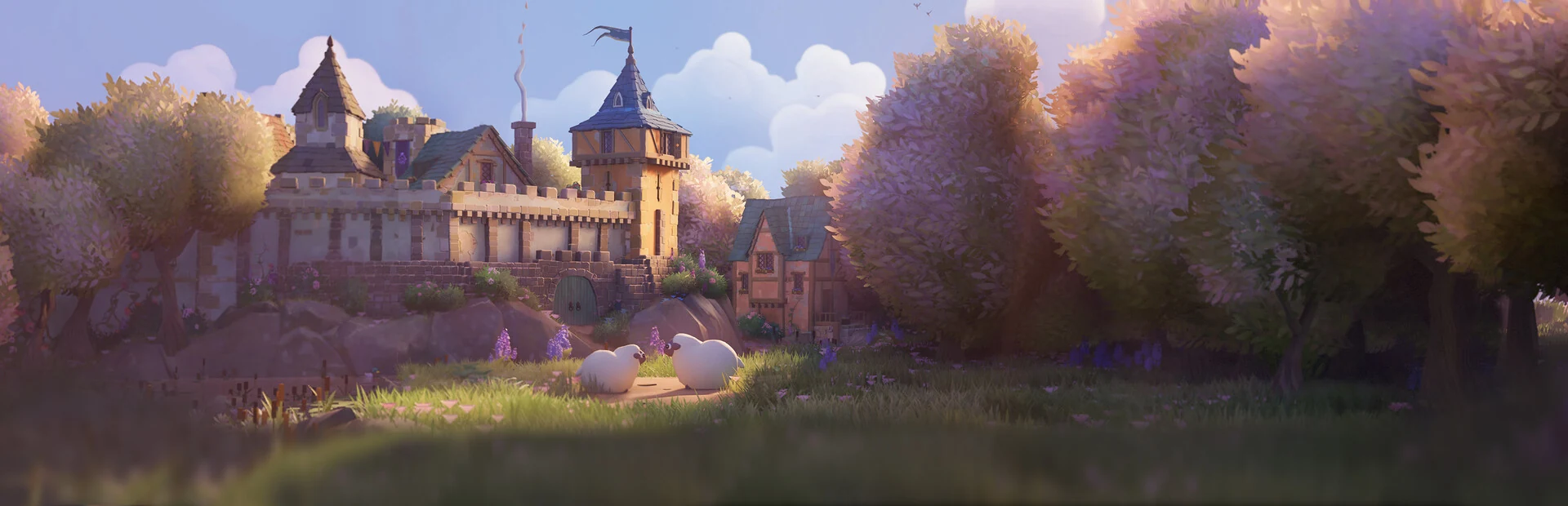
Tiny Glade is a free-form building game focused on miniature castles, cottages and ruins. The game explicitly removes management, combat and failure states, leaving the act of shaping a place as the main activity. Buildings respond to changes in their surroundings with generated details, so an adjustment can produce more than the outline initially drawn. The strongest element is that invitation to experiment. The important limitation is that there is no hidden city-management campaign behind the scenery. Readers who need a production target or a victory condition may find the freedom unstructured. Tiny Glade is best chosen when making and revising a small scene is already a satisfying goal. Walls, paths and water react to the shapes placed around them, making revision part of the pleasure.
The next objective is your own idea
Progress in Tiny Glade means developing a scene rather than unlocking the next story chapter. The premise encourages changing direction freely, with the building system adapting paths, walls and structures as the player experiments. We rate the structure according to that creative purpose. The absence of a prescribed endpoint makes it possible to follow an idea, but also means the game cannot supply all of the motivation for a player who wants constant assigned tasks. It helps to begin with a modest concept, such as a courtyard or a ruined tower, and allow the tools' responses to suggest the next change. The resulting process is closer to constructing a diorama than administering a settlement.
Detail is the response to your actions
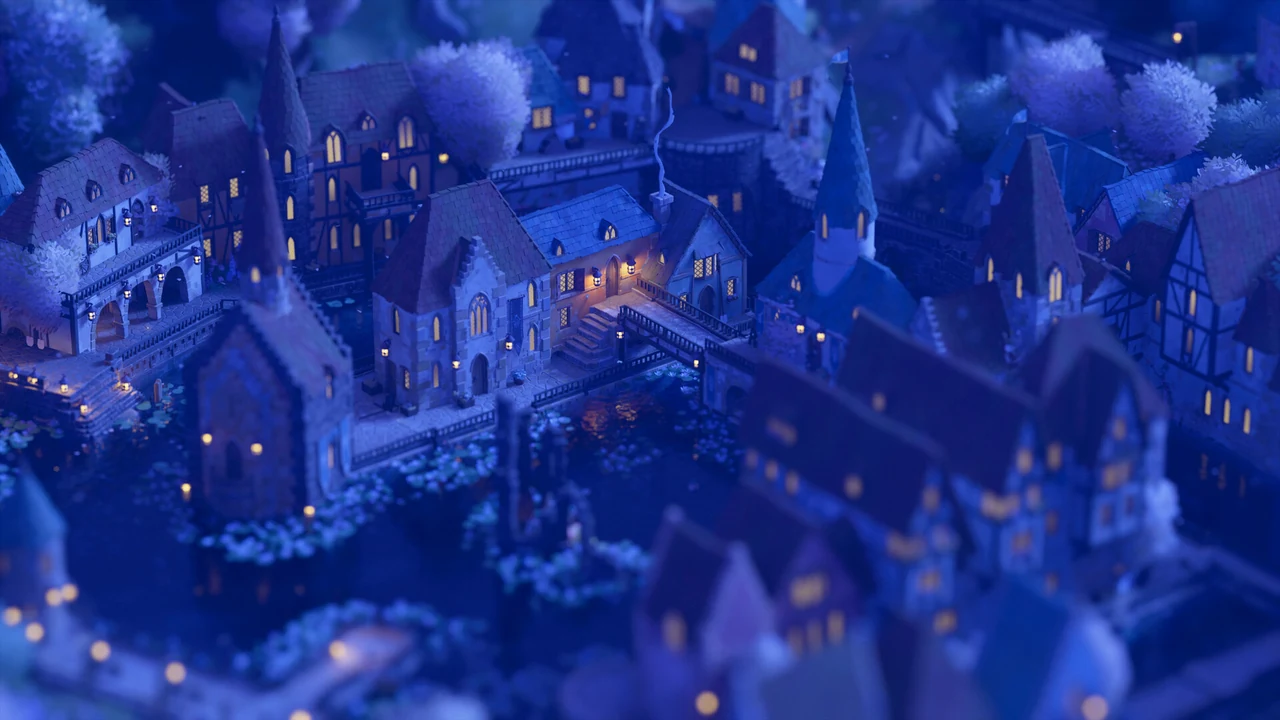
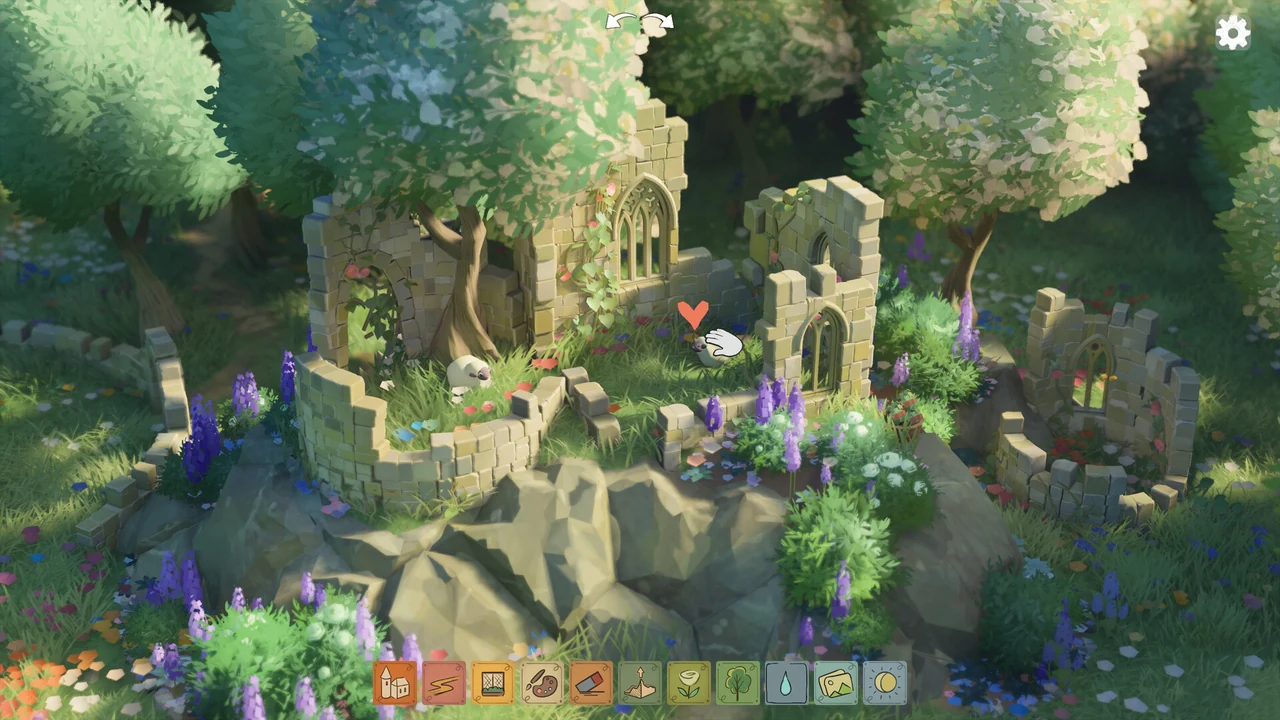
Tiny Glade's presentation is central to the interaction. The official examples show architectural details appearing as a path or building changes, while vegetation and small environmental movement help the scene feel inhabited. We rate that feedback highly because it gives experimentation an immediate visual reward. The attractive result should not be mistaken for a simulation of actual construction or ecological processes. This is a creative toy using a designed building system. No PEGI classification has been confirmed in the checked official sources, so the facts panel leaves that status unconfirmed rather than guessing from the gentle appearance. Technical suitability also remains a separate question from whether the miniature-world style is appealing.
Return when another scene occurs to you
Tiny Glade offers an open creative process, so a universal finishing time would not be a useful description. Returning depends on having another arrangement to try or wanting to refine a previous idea. Our replay assessment recognises that ongoing possibility without pretending the game contains an endless queue of authored missions. Dorfromantik is a useful comparison for readers who want to make attractive landscapes while solving explicit placement problems. Choose Tiny Glade when the constraints of a score or limited tile supply would interrupt the activity you enjoy. Its strongest promise is a responsive way to sketch and revise a place, with the satisfaction coming from what you make rather than from a system declaring it complete. This is our creative-building pick because it removes resource pressure while keeping the act of construction expressive.
The verdict
Choose Tiny Glade for free-form building and detailed miniature scenes without combat or management pressure. This is our creative-building pick because it removes resource pressure while keeping the act of construction expressive.
Reasons to play
- Detailed building presentation
- Tools encourage experimenting with shapes and scenery
- No combat or resource-management requirement
Reasons to think twice
- No conventional campaign or completion target
- Not a management simulator
- A verified PEGI classification was not established in the source set
See the game
Assist & accessibility
Parents’ guide
Players: Single-player. No in-game purchase marker in the checked Steam listing. Separate downloadable content may be sold.
Age classification: Not listed on Steam.
A useful starting tip
Try running a path through an existing structure, then change its height to see how the building system adapts the details.
A different direction
Compare this with Dorfromantik: Choose Dorfromantik for tile-placement planning that combines landscape building with scoring objectives. Tile matching adds a scoring challenge, so this is more structured than the free-building options alongside it.
Official sources
Reviewed: November 2026
You might also like
 DorfromantikRead review →
 Chicory: A Colorful TaleRead review →
 Mini MetroRead review →