A closer look · Puzzle adventure
Chicory: A Colorful Tale
A creative adventure where colouring changes both the landscape and your relationship with it.
Game facts
- Developer
- Wishes Ultd., Greg Lobanov, Alexis Dean-Jones, Lena Raine, Madeline Berger, A Shell in the Pit
- Publisher
- Finji
- Released
- 10 June 2021
- Platforms
- Windows · macOS (Steam edition)
- Model
- Paid game
- PEGI
- 7 — Nintendo Switch edition; not a separate PC classification
- Players
- Single-player · Multi-player · Co-op · Shared/Split Screen Co-op
- Length
- Short
- Difficulty
- 2 / 5 · Approachable
- Steam Deck
- Verified
PEGI source ↗ · Steam Deck status source ↗
Edition: Base game
The score, explained
The interest and responsiveness of the core decisions and actions.
How progression, exploration and goals fit together.
The coherence of the visual, musical and narrative presentation.
How clearly the game explains its rules and offers useful ways to engage.
The depth of optional goals, alternative approaches and reasons to return.
The brush is the main tool
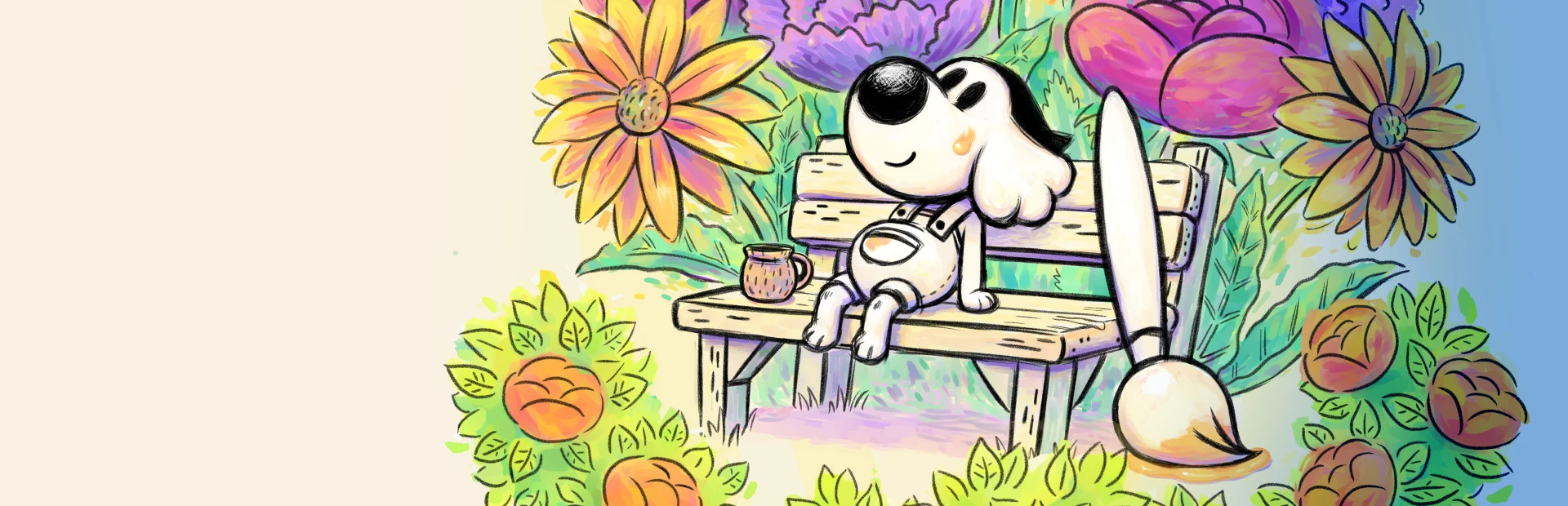
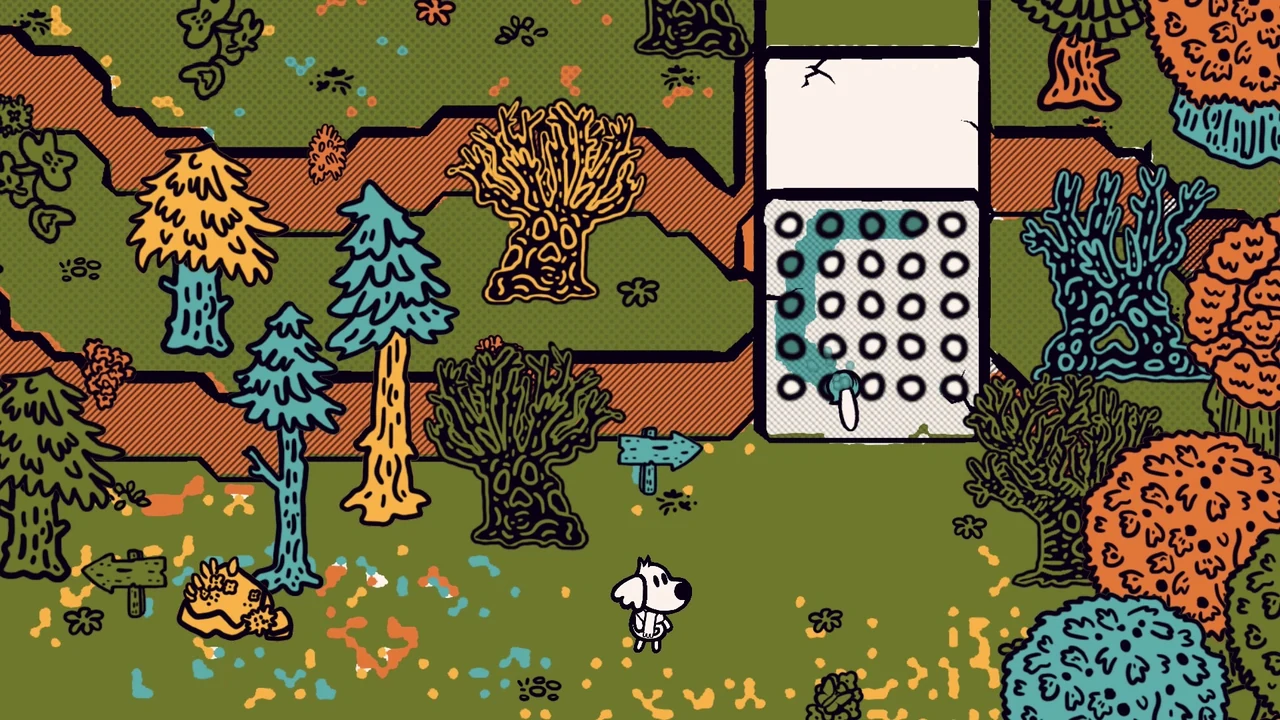
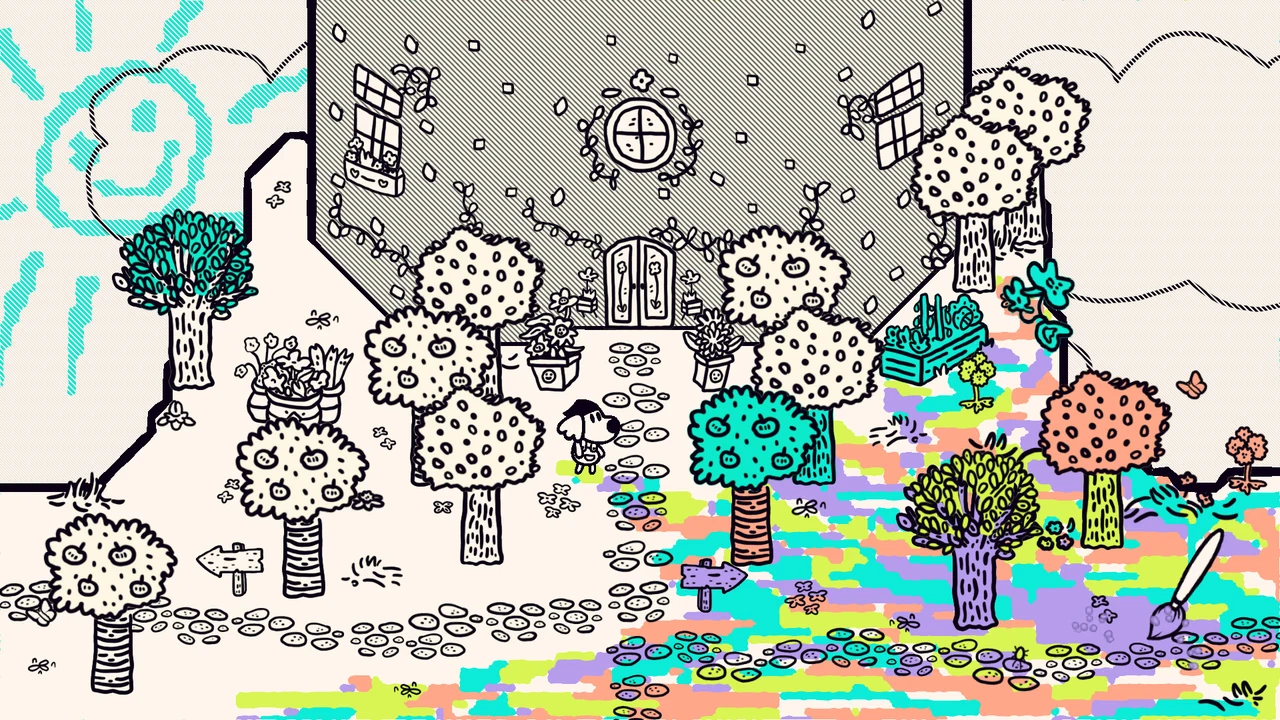
Chicory makes painting the central action of an adventure rather than a separate decorating screen. Colour has disappeared from the Picnic Province, and the player takes up a brush associated with a missing, celebrated artist. Painting can alter the environment, solve puzzles and help reach new places. That gives creative expression an immediate practical role: experimenting with a surface can move the story forward as well as change its appearance. We rate this core idea highly because the same tool supports several different player intentions. You can follow the objective, investigate a visual clue or stop to personalise a scene. Someone who needs every interaction to have one correct purpose may find that freedom less attractive than a more conventional adventure toolset.
Abilities that expand a familiar idea
New paint abilities extend what the brush can do as the adventure develops. Instead of abandoning its premise, Chicory can ask the player to reconsider earlier spaces using a more capable version of the same creative tool. Side activities include tasks for the province's animal residents and opportunities to collect clothing, plants and furniture. These systems make sense alongside a story about taking on a creative role: both the world and the protagonist can become more personal. The trade-off is that a reader interested only in a direct puzzle sequence may not value every optional diversion equally. Our structure assessment reflects the way those activities reinforce the main premise, rather than treating the number of side quests as a measure of quality by itself.
A world that leaves room for you
The colouring-book presentation is unusually well matched to the interaction. Outlines and uncoloured spaces communicate that the environment can be changed, while the animal cast keeps conversations visually distinctive. Local co-operative play allows a second person to join the painting, extending that invitation to participate. This does not make the whole game an unrestricted art application; it remains an authored adventure with its own situations and progression. The appeal is the amount of personal expression it can accommodate inside that recognisable structure. Painting is both a tool and a way to leave a personal mark on the world. The colouring-book presentation makes that connection immediately legible, while conversations about creativity and expectation give the playful surface a more reflective side.
For curiosity rather than competition
Chicory is a strong fit if discovering what the brush can affect sounds more appealing than optimising damage or chasing a competitive ranking. Its mixture of exploration, characters and optional personalisation gives it several ways to hold attention, while the shared painting mode offers another reason to revisit familiar places. We would not recommend it solely on the assumption that bright artwork means a story without difficult feelings; the missing artist and the responsibility of replacing them are central to its premise. Compared with Spiritfarer, this is the more immediately experimental choice, placing environmental interaction ahead of recurring production tasks. Its best audience is a player who wants an adventure to recognise creative curiosity as a useful skill rather than a distraction. In our quiet problems selection, Chicory: A Colorful Tale earns its place because painting changes traversal as well as appearance.
The verdict
A creative adventure where colouring changes both the landscape and your relationship with it.
Reasons to play
- Painting changes traversal as well as appearance
- New brush abilities make exploration develop naturally
- Local co-op lets another player join the colouring
Reasons to think twice
- Free colouring can distract from following the adventure
- Readers seeking demanding combat should look elsewhere
See the game
Assist & accessibility
Explore the available settings and control options on the official game page before choosing your setup.
Parents’ guide
Players: Single-player · Multi-player · Co-op · Shared/Split Screen Co-op. No in-game purchase marker in the checked Steam listing. Separate downloadable content may be sold.
Age classification: 7. Nintendo Switch edition; not a separate PC classification
A useful starting tip
Try painting a suspicious surface before assuming you need another conventional key or switch.
A different direction
Compare this with Spiritfarer: Farewell Edition: A gentle management routine wrapped around difficult goodbyes and memorable passengers.
Official sources
Reviewed: November 2026
You might also like
 DorfromantikRead review →
 Mini MetroRead review →
 TOEM: A Photo AdventureRead review →