A closer look · Adventure
TOEM: A Photo Adventure
Choose TOEM for a compact photography adventure where observing scenes and helping characters drive progress. The camera gives wandering a clear purpose through small observation tasks and character requests.
Game facts
- Developer
- Something We Made
- Publisher
- Something We Made, popagenda
- Released
- 17 September 2021
- Platforms
- Windows · macOS · Linux (Steam edition)
- Model
- Paid game
- PEGI
- 3 — Nintendo Switch edition; not a separate PC classification
- Players
- Single-player
- Length
- Short
- Difficulty
- 1 / 5 · Gentle
- Steam Deck
- Verified
PEGI source ↗ · Steam Deck status source ↗
Edition: Base game
The score, explained
The interest and responsiveness of the core decisions and actions.
How progression, exploration and goals fit together.
The coherence of the visual, musical and narrative presentation.
How clearly the game explains its rules and offers useful ways to engage.
The depth of optional goals, alternative approaches and reasons to return.
Photography makes looking useful
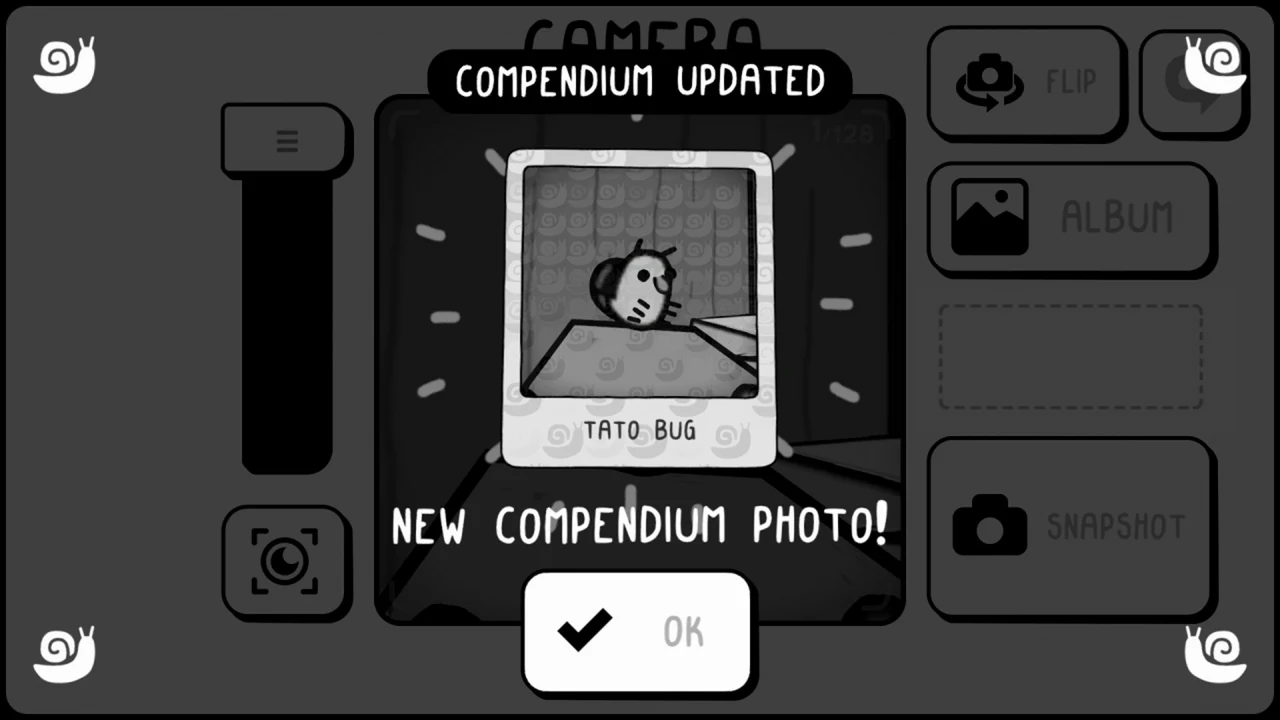
TOEM turns the camera into a practical adventure tool. Characters have problems that can be solved by noticing the right subject and taking a useful photograph, so observation becomes something the player does rather than only a way to appreciate scenery. The strongest element is that direct relationship between looking and helping. The game presents an exploratory journey with distinctive characters, not a simulation of professional photography equipment. Readers who want complex exposure controls or realistic camera systems should therefore adjust their expectations. The stronger fit is someone who enjoys reading a small environment for clues and finding that an apparently ordinary detail has a purpose inside another character's request.
Requests give a journey its shape
The trip develops through places and people whose tasks encourage closer attention to the surroundings. A request supplies direction without needing to turn every scene into a combat space or a large inventory puzzle. We rate the structure positively because photography keeps the different errands related to one another. The limitation is that an authored observation puzzle changes once its solution is known. Returning can reveal details that were previously overlooked, but it does not produce the same variety as a procedural strategy game. TOEM is better chosen for the coherence of the expedition than for a long progression ladder. A reader who enjoys completing a series of small discoveries has a clear reason to consider it.
A monochrome world with recognisable subjects
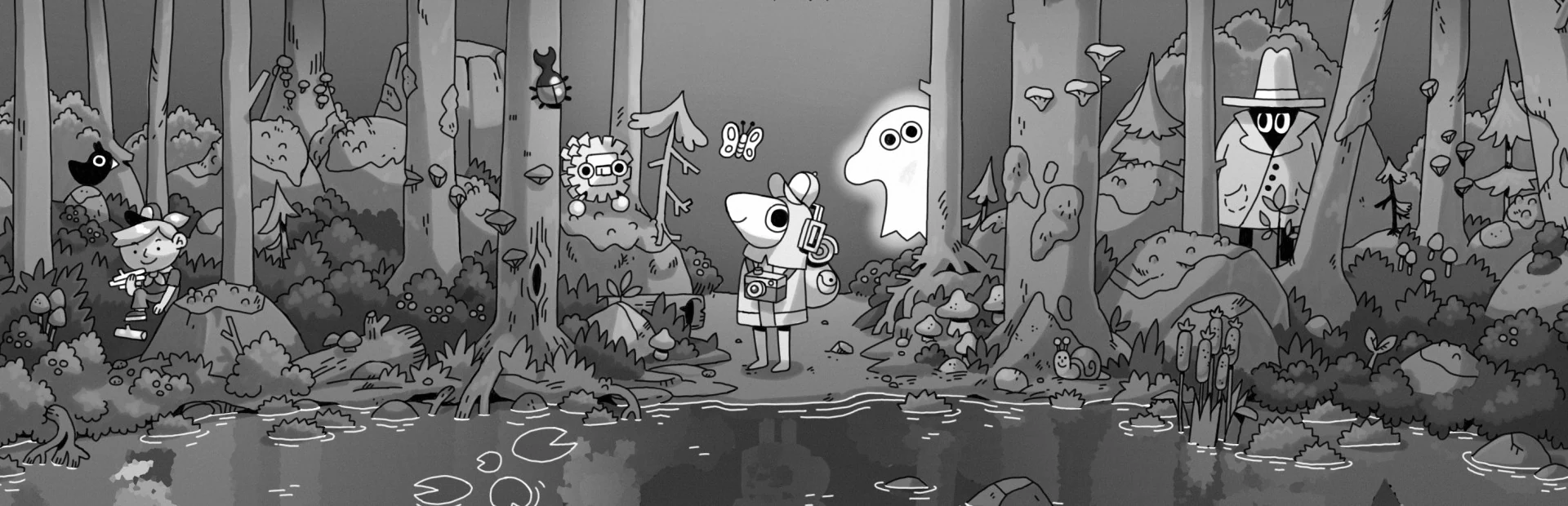
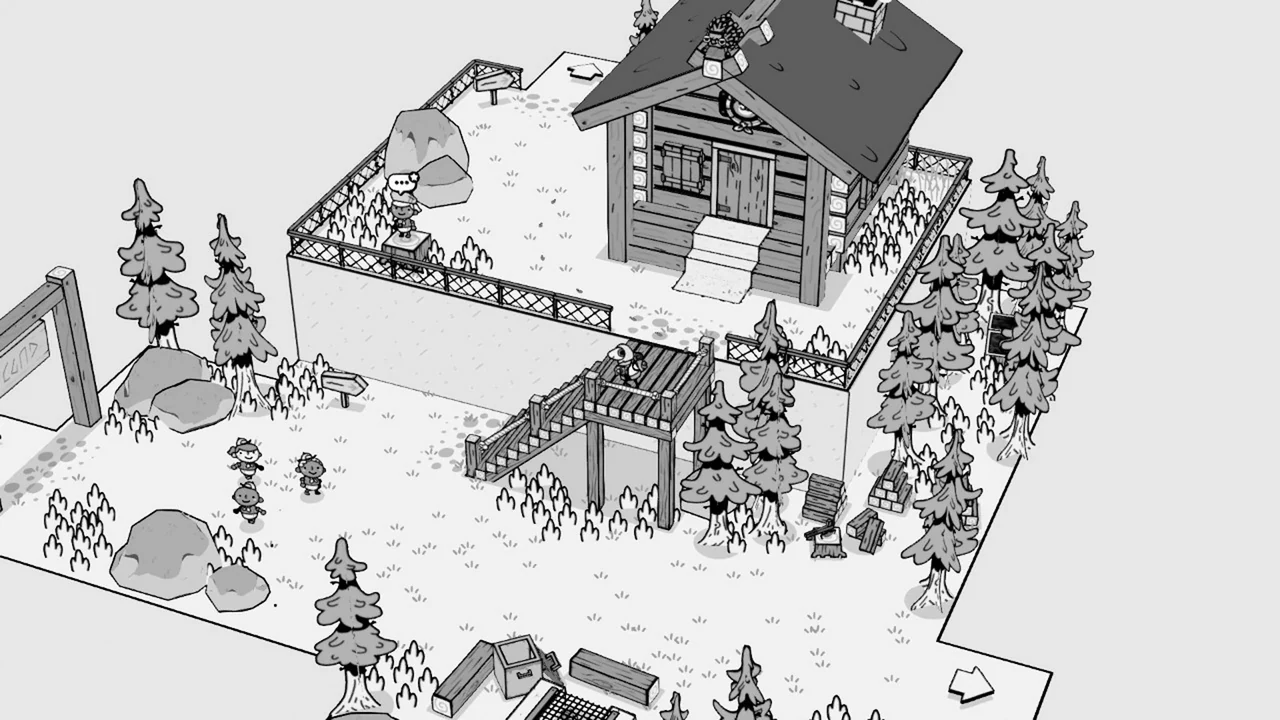
The hand-drawn monochrome style gives TOEM a clear visual identity and makes its unusual inhabitants feel like parts of the same journey. Because photography is the central interaction, the presentation must provide subjects worth noticing as well as a pleasant backdrop. We value that connection between image and activity. The game also emphasises the atmosphere of travelling through the landscape rather than competing for a professional score. Prospective players should consider their comfort with observation puzzles separately from whether they like the drawing style; appreciating an image and locating a specific clue are different demands. Its black-and-white environments make the camera's changes of perspective especially useful. A character's request often sends you looking more closely at something already nearby, turning observation into the central activity rather than a pause between larger challenges.
Choose it for small discoveries
TOEM suits players who like a clear request, a little investigation and the satisfaction of returning with the right observation. The camera provides a consistent action while the environments supply changing subjects. Our return score is more restrained than the core-play score because known photo solutions naturally lose some novelty. Chants of Sennaar offers an alternative when observation appeals but a more layered language-deduction structure sounds better. Choose TOEM for the lighter expedition and the pleasure of helping distinctive characters through careful looking. It is strongest when a modest detail becoming useful is enough of a reward, rather than when the player needs combat mastery or an elaborate collection of equipment to remain engaged. The camera gives wandering a clear purpose through small observation tasks and character requests.
The verdict
Choose TOEM for a compact photography adventure where observing scenes and helping characters drive progress. The camera gives wandering a clear purpose through small observation tasks and character requests.
Reasons to play
- Photography is integral to solving tasks
- A distinctive monochrome presentation
- A short main adventure with optional discoveries
Reasons to think twice
- Less suitable for players seeking combat
- The main game is relatively brief
- Replay routes vary less than in procedural games
See the game
Assist & accessibility
Parents’ guide
Players: Single-player. No in-game purchase marker in the checked Steam listing. Separate downloadable content may be sold.
Age classification: 3. Nintendo Switch edition; not a separate PC classification
A useful starting tip
Treat each character's request as a clue about what to observe, then look beyond the most obvious subject before taking the photograph.
A different direction
Compare this with Alba: A Wildlife Adventure: Choose Alba for a short wildlife-photography adventure built around exploring an island and helping its community. Wildlife photography and a compact island provide direction without turning exploration into a large commitment.
Official sources
Reviewed: November 2026
You might also like
 DorfromantikRead review →
 Chicory: A Colorful TaleRead review →
 Mini MetroRead review →