
A closer look · Puzzle
Unpacking
Choose Unpacking for an organised placement puzzle that tells a personal story through rooms and possessions. Its placement puzzles make everyday objects carry the story, offering a more directed experience than a sandbox.
Game facts
- Developer
- Witch Beam
- Publisher
- Balor Games
- Released
- 1 November 2021
- Platforms
- Windows · macOS · Linux (Steam edition)
- Model
- Paid game
- PEGI
- 3 — Nintendo Switch edition; not a separate PC classification
- Players
- Single-player
- Length
- Short
- Difficulty
- 1 / 5 · Gentle
- Steam Deck
- Verified
PEGI source ↗ · Steam Deck status source ↗
Edition: Base game
The score, explained
The interest and responsiveness of the core decisions and actions.
How progression, exploration and goals fit together.
The coherence of the visual, musical and narrative presentation.
How clearly the game explains its rules and offers useful ways to engage.
The depth of optional goals, alternative approaches and reasons to return.
An ordinary task with narrative weight
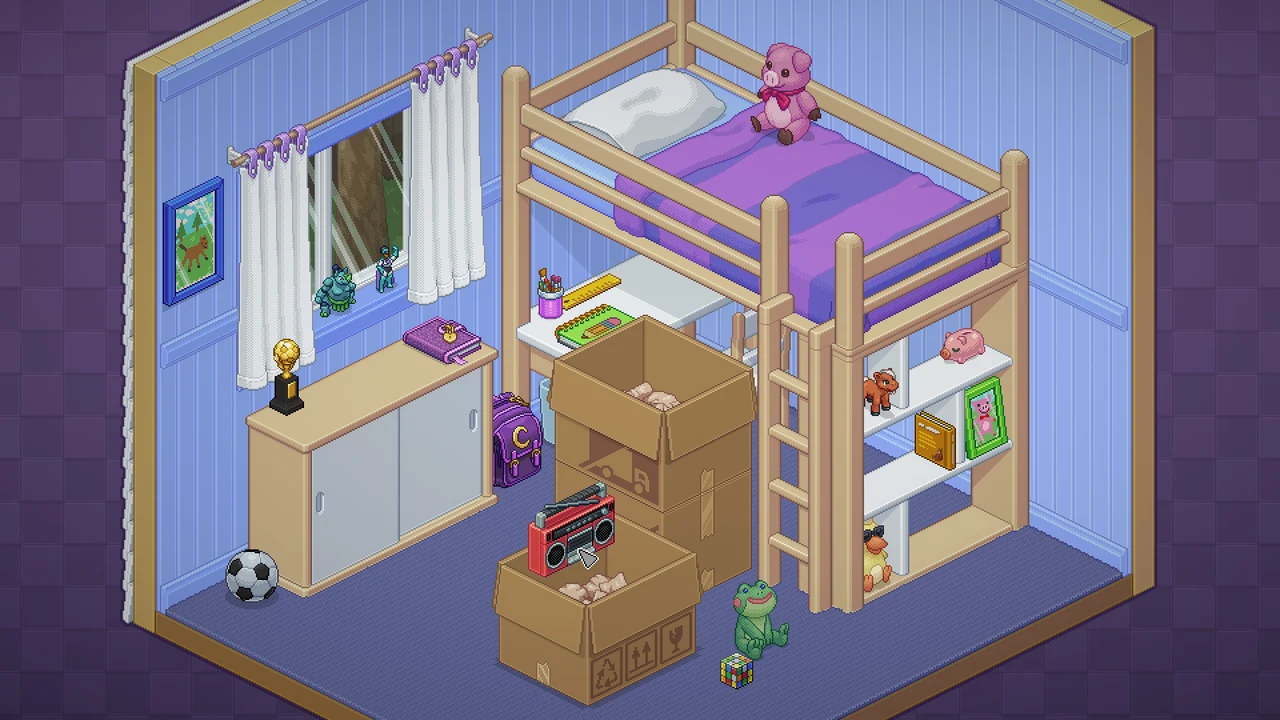
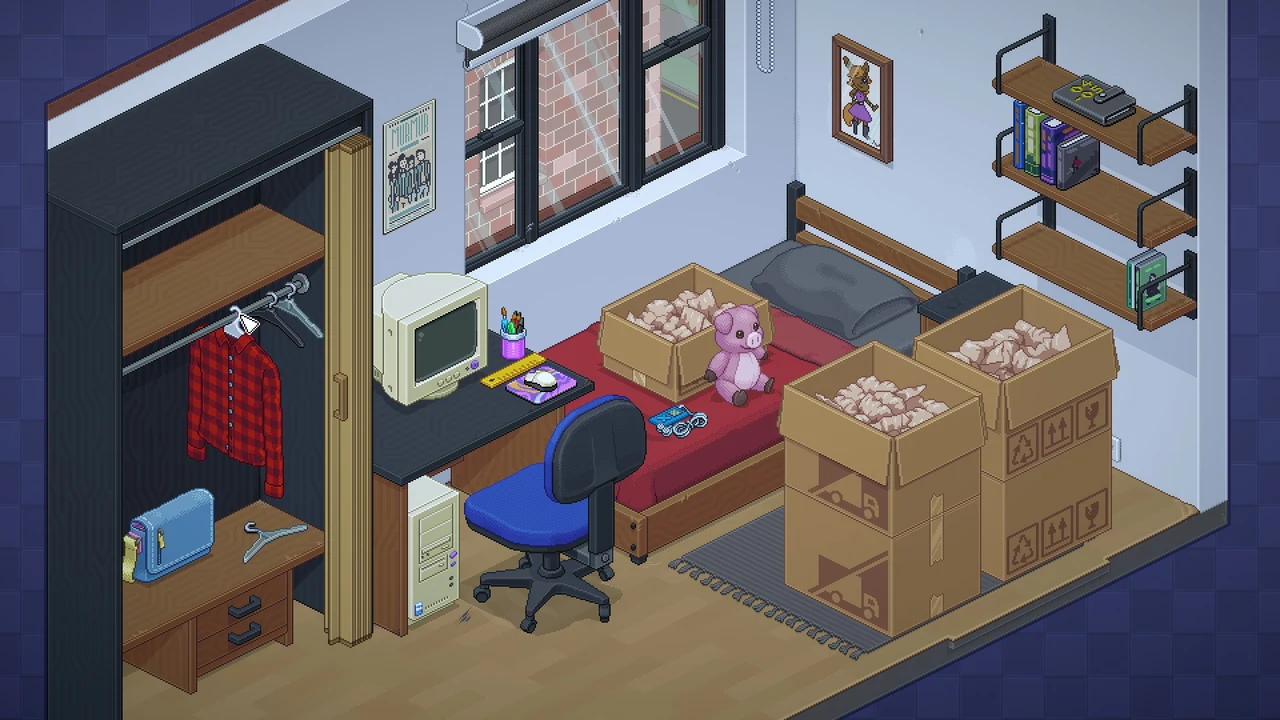
Unpacking asks the player to remove possessions from boxes and find places for them in a new home. The design describes a combination of fitting objects and decorating rooms, but the objects also carry clues about the person who owns them. The strongest element is this connection between a practical task and a story told indirectly. It makes paying attention useful in more than one way. The limitation is that the game still has placement rules; it is not an unrestricted interior-design application. Readers who want complete decorative freedom may dislike being guided towards particular relationships between objects and rooms, while those interested in what a possession suggests have a stronger reason to engage.
A life seen through changing rooms
The sequence of house moves gives Unpacking a clear structure. Familiar objects can return in a different space, while new possessions and missing items invite the player to consider what has changed. The game emphasises the absence of timers and scoring meters, leaving attention on arrangement and observation rather than speed. We rate that structure positively because the same activity can acquire new meaning without needing an unrelated minigame between moves. The authored sequence is finite, however. Someone seeking a large procedural housing simulation or a continuous stream of management decisions should not expect that form of longevity. The attraction is the carefully selected relationship between everyday belongings and the spaces that receive them.
Small objects do the expressive work
The visual identity depends on possessions being recognisable enough to arrange and distinctive enough to remember. Rooms provide context, while repeated items can become a quiet link between different stages of the journey. We rate the presentation for supporting that close observation rather than relying on spectacle. The main creative point is that the ordinary task remains central: a shelf, a desk or a bathroom can communicate something because of what is placed there. Players who enjoy noticing those details are more likely to value the presentation than someone looking mainly for large dramatic scenes. The possessions carried from one home to the next become clues about a life outside the frame.
Choose a story told through possessions
Unpacking is best suited to a reader who finds meaning in small domestic details and enjoys completing a practical arrangement. A second visit can change decorative choices or reveal an object whose significance was missed, but it will not generate an entirely new life story. Our return score reflects that distinction. Venba offers another way to connect everyday activity with a personal narrative, using recipes and family conversations instead of belongings and rooms. Choose Unpacking when you want the story to emerge through what you do and notice rather than through extensive explanation. Its restrained format is a strength for that audience, but it should not be mistaken for a broad simulation simply because the rooms look inviting. Its placement puzzles make everyday objects carry the story, offering a more directed experience than a sandbox.
The verdict
Choose Unpacking for an organised placement puzzle that tells a personal story through rooms and possessions. Its placement puzzles make everyday objects carry the story, offering a more directed experience than a sandbox.
Reasons to play
- A specific, coherent object-placement mechanic
- Story information is conveyed through possessions
- A short campaign is easy to plan around
Reasons to think twice
- Placement rules can limit free decoration
- There is no large simulation or management layer
- Replay differences are limited compared with procedural games
See the game
Assist & accessibility
Parents’ guide
Players: Single-player. No in-game purchase marker in the checked Steam listing. Separate downloadable content may be sold.
Age classification: 3. Nintendo Switch edition; not a separate PC classification
A useful starting tip
Notice which possessions return in later homes; placement can reveal a story even when there is no dialogue explaining it.
A different direction
Compare this with Chicory: A Colorful Tale: A creative adventure where colouring changes both the landscape and your relationship with it.
Official sources
Reviewed: November 2026
You might also like
 DorfromantikRead review →
 Chicory: A Colorful TaleRead review →
 Mini MetroRead review →