A closer look · Exploration adventure
Sable
An open exploration game for players who prefer self-directed discovery to urgent objectives. The absence of combat leaves discovery in charge, although choosing your own route remains part of the task.
Game facts
- Developer
- Shedworks
- Publisher
- Raw Fury
- Released
- 23 September 2021
- Platforms
- Windows (Steam edition)
- Model
- Paid game
- PEGI
- 3 — Xbox UK edition edition; not a separate PC classification
- Players
- Single-player
- Length
- Short
- Difficulty
- 1 / 5 · Approachable
- Steam Deck
- Verified
PEGI source ↗ · Steam Deck status source ↗
Edition: Base game
The score, explained
The interest and responsiveness of the core decisions and actions.
How progression, exploration and goals fit together.
The coherence of the visual, musical and narrative presentation.
How clearly the game explains its rules and offers useful ways to engage.
The depth of optional goals, alternative approaches and reasons to return.
A journey you give direction to
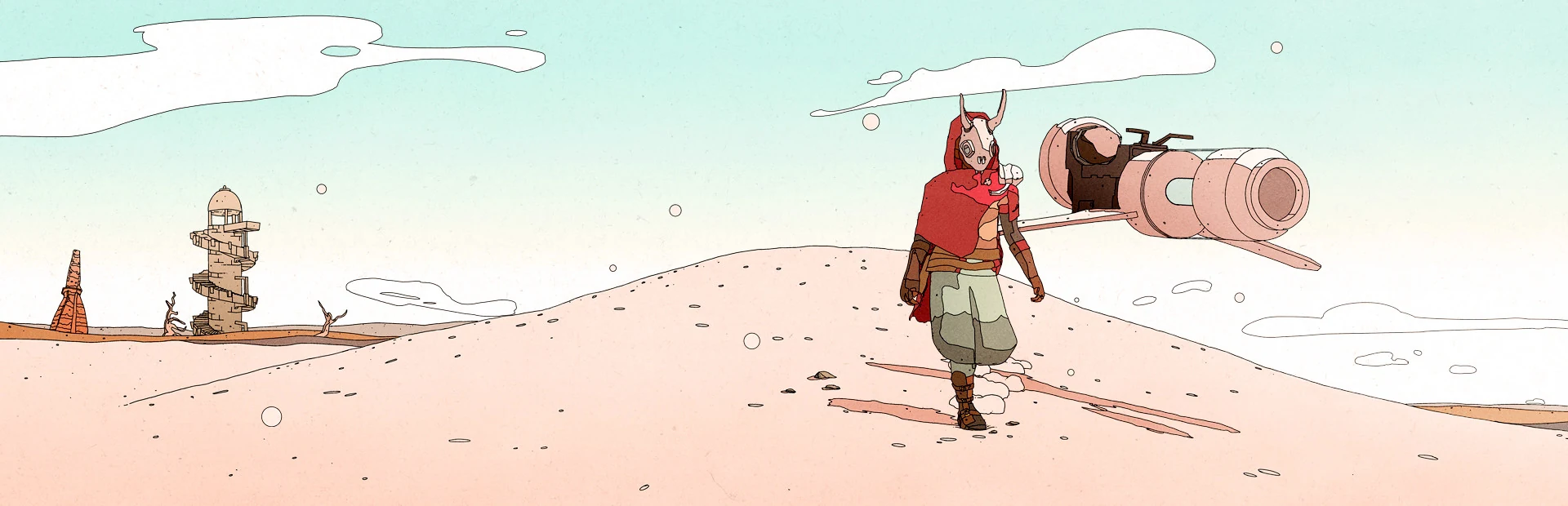
Sable sends its young traveller into a desert world for a rite of passage, using exploration as a way to consider identity. Riding a hoverbike, climbing ruins and meeting other nomads form the core of the published premise. The attraction is freedom to follow something that looks interesting rather than constant pressure to resolve a combat encounter. The strongest element is that clear preference for self-directed discovery. It also identifies the main limitation: a player who relies on urgent objectives for motivation may feel less anchored. Sable is easier to recommend when choosing the next landmark is itself enjoyable, and when the question of what lies over the horizon is enough reason to leave a familiar route.
Collecting possibilities rather than a single build
Masks, outfits and hoverbike parts make exploration feed back into the traveller's appearance and sense of identity. Helping other people and investigating ruins provide different reasons to move through the landscape, while climbing and gliding alter how a destination can be approached. The game also includes fishing and collecting creatures for the Vivarium. We rate the structure positively because its activities sit naturally inside a journey of discovery rather than creating a separate production career. The trade-off is that the player must decide which possibilities are worth pursuing. Someone who wants a tightly ordered sequence of escalating tests should consider whether that open rhythm will feel freeing or whether it will dilute the sense of progress they prefer.
A landscape made to be noticed
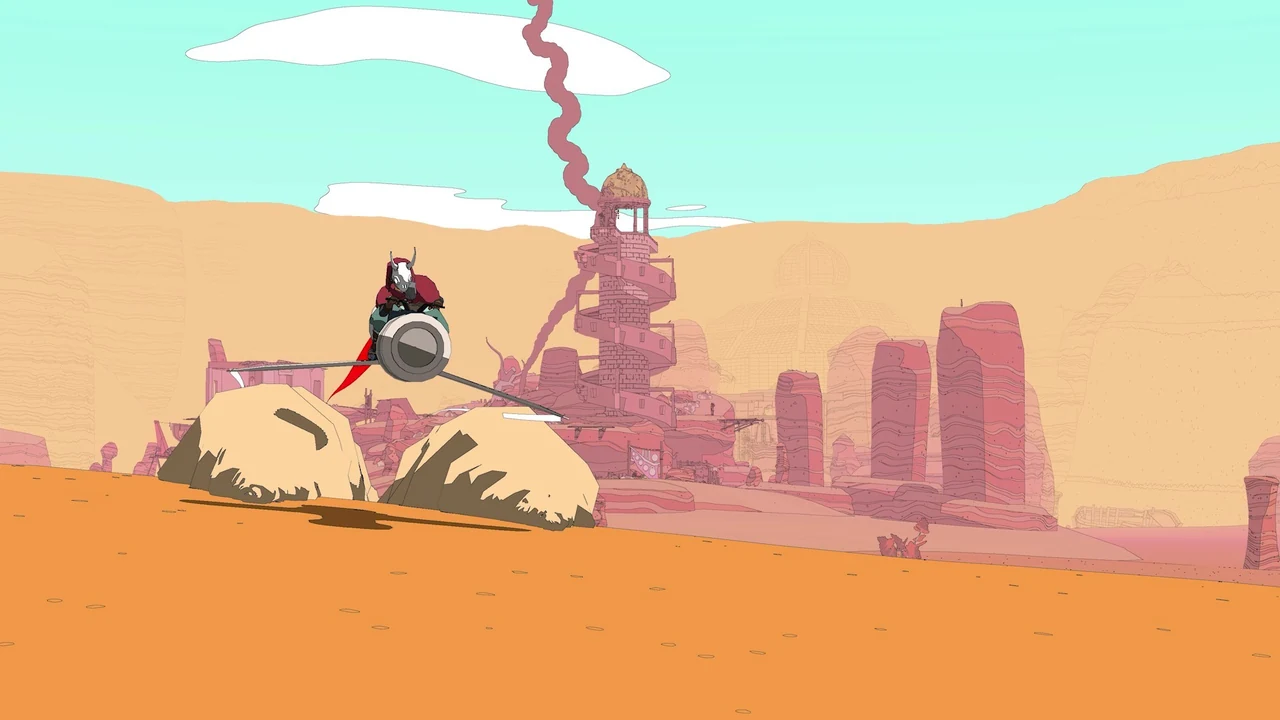
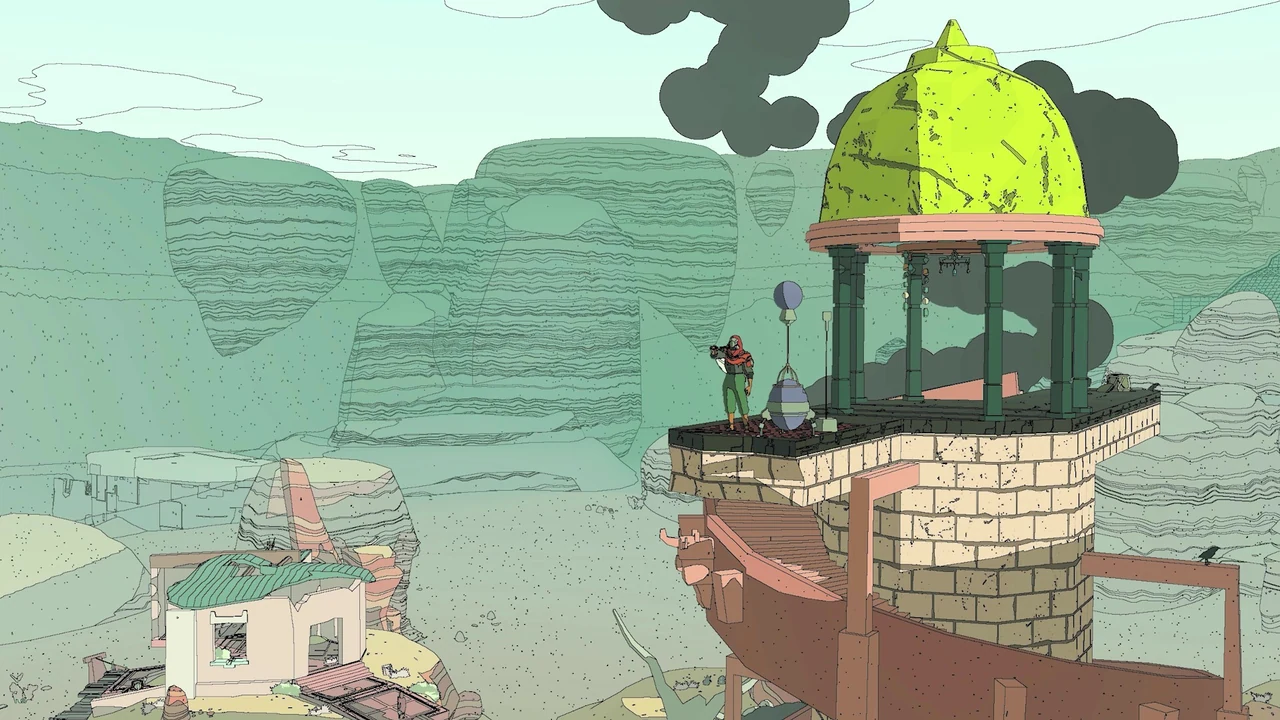
Sable's distinctive line work and restrained colour fields give the desert, ruins and distant structures a strong identity. That matters in a game where a visible destination can become the player's next objective without a detailed instruction. The presentation makes looking outward part of the activity. We rate the visual concept highly because it serves the journey's open direction. Readers should keep that aesthetic judgement separate from device-specific performance questions. The space between distant landmarks gives each arrival a clear visual presence, while the contrast between open desert and intricate ruins encourages different kinds of exploration. Sable's hoverbike makes crossing the desert feel different from climbing through the structures scattered across it. Masks and conversations give those journeys a personal purpose, while the open landscape leaves considerable room for wandering without following one prescribed route.
Best when wandering has a purpose for you
Sable suits players who can turn an interesting shape, a conversation or a personalisation option into their own short-term goal. Returning may mean following a route that was previously ignored or spending more time with the world's optional activities. That is a meaningful kind of replay, though it differs from procedural runs or an escalating challenge ladder, which is why our score remains measured. Jusant offers a useful alternative if exploring a place still appeals but you want the main destination to remain unmistakable. Choose Sable for the freedom to decide what the trip should include. It is less about proving that one route was optimal than about finding a collection of discoveries that makes the traveller feel like your own. The absence of combat leaves discovery in charge, although choosing your own route remains part of the task.
The verdict
An open exploration game for players who prefer self-directed discovery to urgent objectives. The absence of combat leaves discovery in charge, although choosing your own route remains part of the task.
Reasons to play
- Exploration gives the player substantial freedom of direction
- Climbing and hoverbike travel offer different views of the world
- Masks and customisation connect discovery to identity
Reasons to think twice
- Self-directed exploration can feel aimless without personal goals
- Players wanting frequent combat rewards should choose a different adventure
See the game
Assist & accessibility
Explore the available settings and control options on the official game page before choosing your setup.
Parents’ guide
Players: Single-player. No in-game purchase marker in the checked Steam listing. Separate downloadable content may be sold.
Age classification: 3. Xbox UK edition edition; not a separate PC classification
A useful starting tip
Choose one visible landmark and investigate it fully before turning the whole desert into a list of competing destinations.
A different direction
Compare this with Jusant: A tactile climbing adventure that makes route selection the main event.
Official sources
Reviewed: November 2026
You might also like
 DorfromantikRead review →
 Chicory: A Colorful TaleRead review →
 Mini MetroRead review →